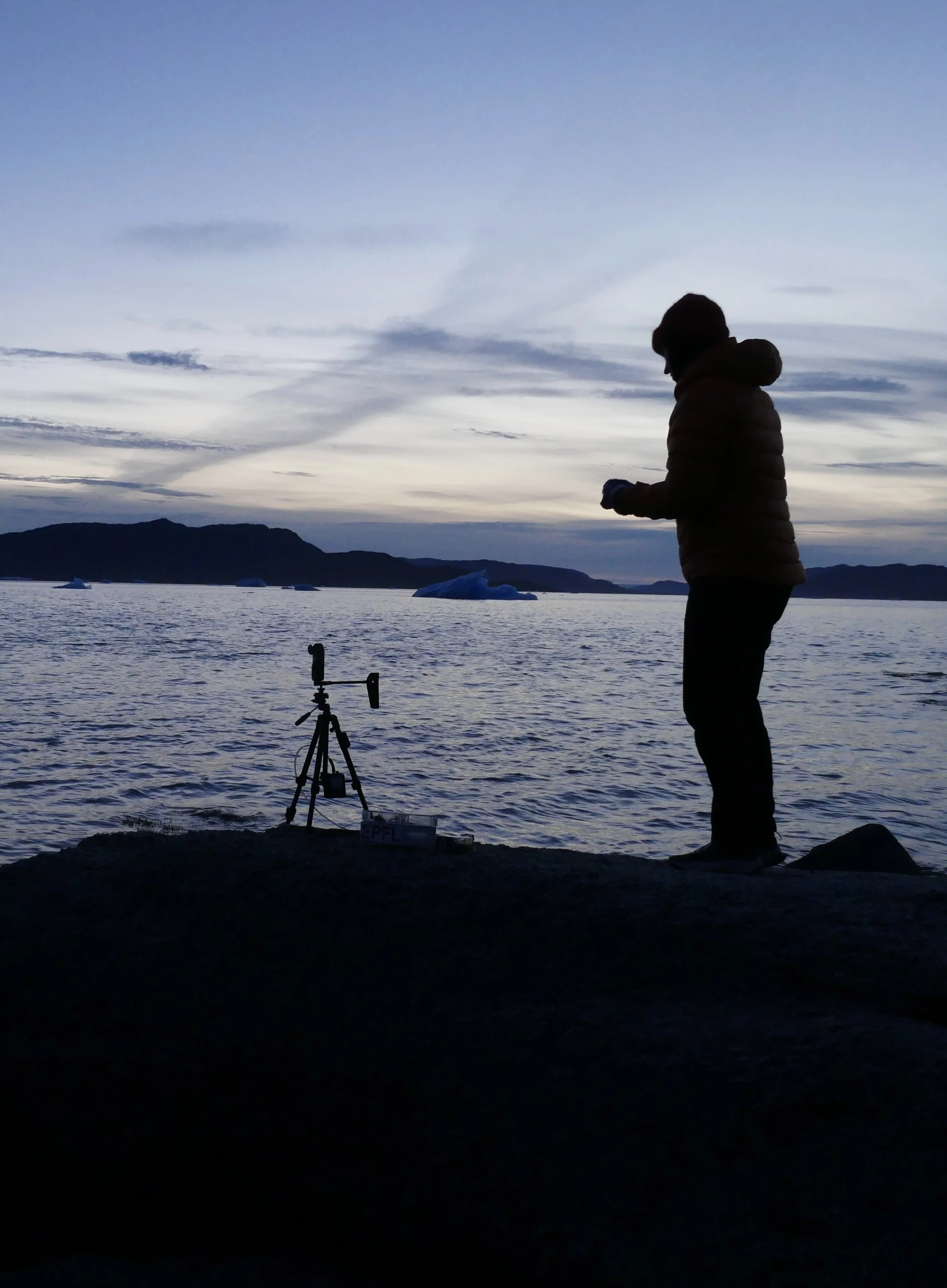
Scientist Cecilie Carstens from the Extreme Environments Research Laboratory (EERL) at NIRS
Scientist Cecilie Carstens from the Extreme Environments Research Laboratory (EERL) has spent the past few weeks in Narsaq, collecting air samples at NIRS and at a remote coastal site. The goal: to measure the size, number, and biological and chemical composition of aerosols — microscopic solid or liquid particles suspended in the atmosphere that originate from the ocean, land, and both biological and human activity.
Together, these measurements form a unique "fingerprint" of the Arctic atmosphere, revealing where aerosols come from and how they form. Though microscopic, aerosols have an outsized influence on the Arctic climate: they shape how clouds form, how much sunlight and heat the Earth reflects or absorbs, and how the atmosphere warms or cools in response.
Because the Arctic atmosphere is exceptionally clean in Summer, even small shifts in aerosol particle numbers can have significant climate effects. Understanding these processes is what allows researchers to refine climate models and produce more reliable predictions of future environmental change.
This research is carried out by scientists from the EERL at EPFL, led by Professor Julia Schmale. The EERL conducts research on how climate change is transforming the polar regions — and what these changes mean for our planet.
The PMPAC project is funded by the Swiss Polar Institute and run in collaboration with the Laboratory for Environmental Spectrochemistry at EPFL and Aerospec.
Learn more